+212 770 02 63 23

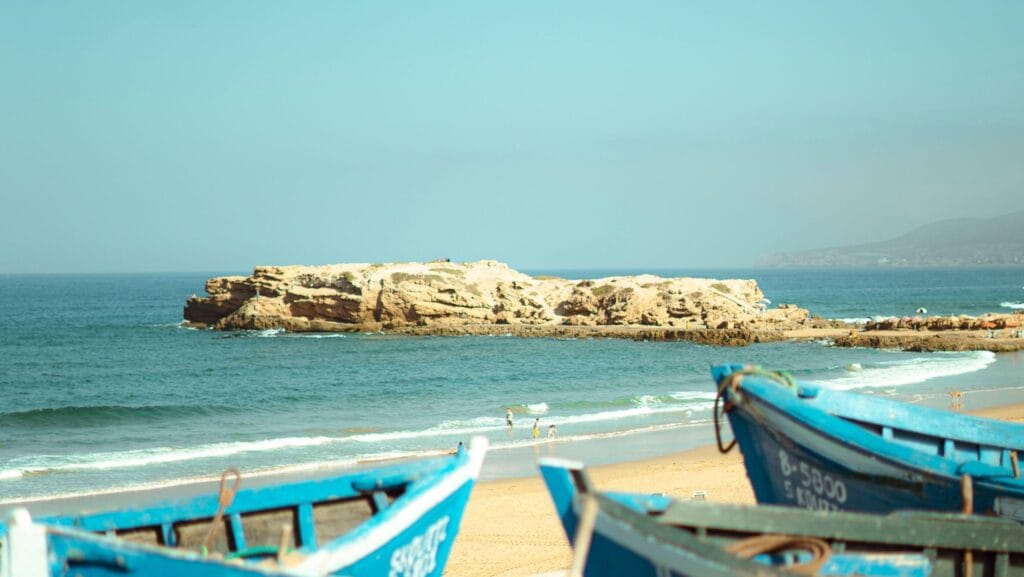
If you’re planning a surf trip to Morocco, Devil’s Rock Surf Spot is worth adding to your list. Located in Tamraght on the Atlantic coast, this popular surf beach offers an accessible base for exploring the waves around Taghazout and the surrounding villages.
Whether you’re learning to catch your first green wave or looking for a relaxed session between bigger surf days, Devil’s Rock deserves a closer look. The key is understanding what the spot offers, how conditions change, and whether it suits your experience.
In this guide, we’ll cover the location, wave conditions, best season, skill levels, practical tips, and nearby surf spots to help you plan your visit.
Table of Contents
Devil’s Rock Surf Spot: Quick Facts
| Feature | Details |
|---|---|
| Location | Tamraght, near Aourir, Morocco |
| Coastline | Atlantic coast |
| Local name | Imourane is also used for the surrounding area and surf spot |
| Wave type | Beach break, with conditions varying across the beach |
| Surfing level | Beginners to experienced surfers, depending on conditions |
| Best season | Winter is generally a strong period for surfing in the region |
| Wave direction | Both lefts and rights can be found |
| Access | Reachable from the coastal road near Aourir |
| Nearby destination | Taghazout and Agadir |
Surf conditions and suitability vary from session to session. Check a current forecast and assess the actual waves before paddling out.
Where Is Devil’s Rock Surf Spot?
Devil’s Rock is located on Morocco’s Atlantic coast near Tamraght and Aourir, north of Agadir and south of Taghazout.
The spot is known for its coastal rock formation, sandy beach, and surf-friendly setting. It is also a convenient stop for visitors staying in the Tamraght–Taghazout area who want to explore several different waves during their trip.
You can reach the area by travelling north from Agadir along the coastal road toward Aourir and Tamraght. Allow extra time during busy periods, and check your accommodation’s directions for the most convenient beach access.
Location tip: Save the spot on your phone before leaving your accommodation, particularly if you’re unfamiliar with the area.
For additional destination information, see the Devil’s Rock guide from Explore Agadir Souss-Massa.
What Is Surfing at Devil’s Rock Like?
One reason surfers visit Devil’s Rock is the opportunity to enjoy a beach session without committing to one of the region’s more demanding point breaks.
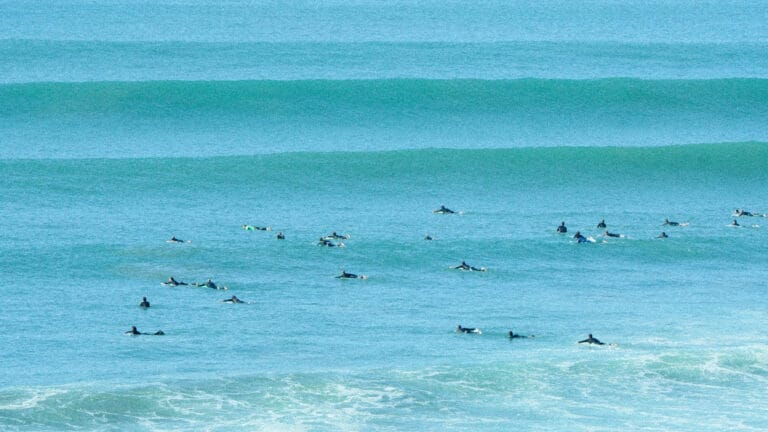
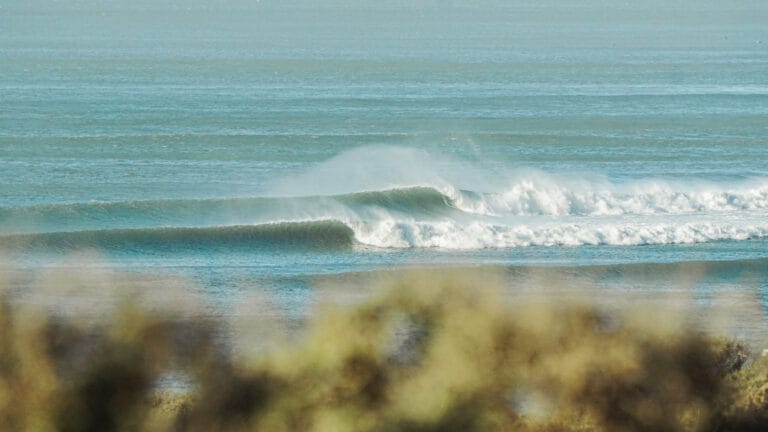
The beach can offer different peaks, with waves breaking left and right depending on the swell, sandbanks, tide, and wind. The experience can change considerably from one day to the next.
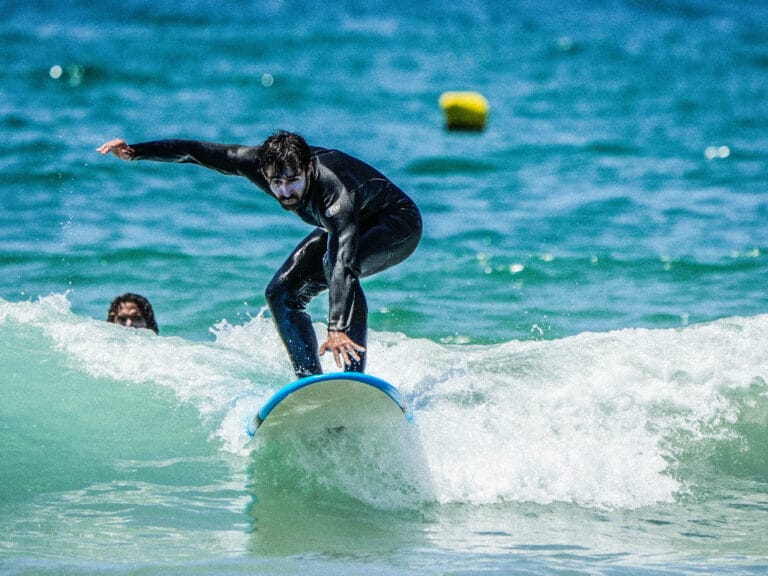
For beginners, the appeal is having a place where lessons and practice sessions may be possible when the conditions are appropriate. More experienced surfers can use the spot as an alternative when they want a different session from the area’s more challenging waves.
However, no surf spot is automatically beginner-friendly in every condition. Strong currents, larger swells, crowded peaks, and changing banks can make an otherwise manageable beach difficult.
Is Devil’s Rock a beach break?
Devil’s Rock is commonly described as a beach-break spot, although the seabed and breaking waves can vary across the area. Do not assume every section is completely free of rocks or underwater hazards.
Take a few minutes to watch the waves before entering. Look for rip currents, rocks, surfers already in the water, and the safest route back to shore.
Are there left and right waves?
Yes, both left- and right-breaking waves are reported at Devil’s Rock. Which direction works best depends on the particular peak and the conditions that day.
If you’re still learning, focus on finding a safe, manageable section rather than chasing the longest ride.
When Is the Best Time to Surf Devil’s Rock?
Winter is generally one of the strongest seasons for surfing along Morocco’s Atlantic coast. The period from autumn through spring is worth considering when planning a surf trip, although individual spots respond differently to swell and wind.
Summer can also provide surfable days, but you should check local conditions rather than expect the same waves throughout the year.
Winter: A popular choice for surf trips
Winter often brings more substantial Atlantic swell to the region. That can create enjoyable sessions, but it can also make conditions unsuitable for beginners.
If you’re new to surfing, ask a qualified local instructor to assess the waves before choosing a session.
Spring and autumn: Flexible surf-trip seasons
These seasons can be useful for visitors who want to combine surfing with sightseeing and exploring the coast. Conditions still vary, so check forecasts close to your travel dates.
Summer: Check the conditions before you go
Summer is not automatically a bad time to surf, but swell size, wind, and local conditions can change the quality of a session.
If you’re visiting outside winter, plan a flexible itinerary so you can move to another suitable spot when Devil’s Rock isn’t working well.
What Are the Best Surf Conditions at Devil’s Rock?
There isn’t one combination of tide, swell, and wind that guarantees a perfect session. The right conditions depend on the particular bank, the size and direction of the swell, and your ability.
Before leaving for the beach, check:
- Swell direction and size: Look for a forecast that explains how the incoming swell affects this stretch of coastline.
- Wind direction and strength: Offshore winds can help clean up wave faces, while strong onshore winds often make waves messier.
- Tide: The shape and quality of breaking waves can change as the tide rises or falls.
- Currents: Watch the water for moving channels and areas where foam or debris travels steadily away from the beach.
- Crowds: Busy periods can make it harder to find a suitable peak and maintain safe spacing.
Use a reliable forecast such as Surf-Forecast’s Devil’s Rock guide, then compare it with what you actually see at the beach.
A forecast is a planning tool, not a guarantee. If conditions look beyond your ability, choose a more suitable spot or surf with a qualified instructor.
Is Devil’s Rock Good for Beginners?
Devil’s Rock is used for surf lessons and is often considered an option for less experienced surfers when the conditions are manageable.
For a first session, the important question isn’t simply whether the beach is beginner-friendly. It’s whether the waves, currents, crowd, and entry point are appropriate on that particular day.
Why beginners may enjoy Devil’s Rock
- The beach can provide space to practise when the lineup is not too crowded.
- Surf schools in the surrounding area may offer lessons and equipment.
- Different peaks can provide options as conditions change.
- The location is convenient for visitors staying around Tamraght and Taghazout.
What should beginners watch out for?
Even a popular learning beach can become challenging with larger swell, strong currents, or busy surf-school sessions.
If you’re a beginner, consider these simple precautions:
- Take a lesson with a qualified local instructor.
- Choose a suitable beginner board and wear appropriate equipment.
- Learn how to identify rip currents and follow local beach advice.
- Stay within the area recommended by your instructor.
- Respect the right of way and leave space between surfers.
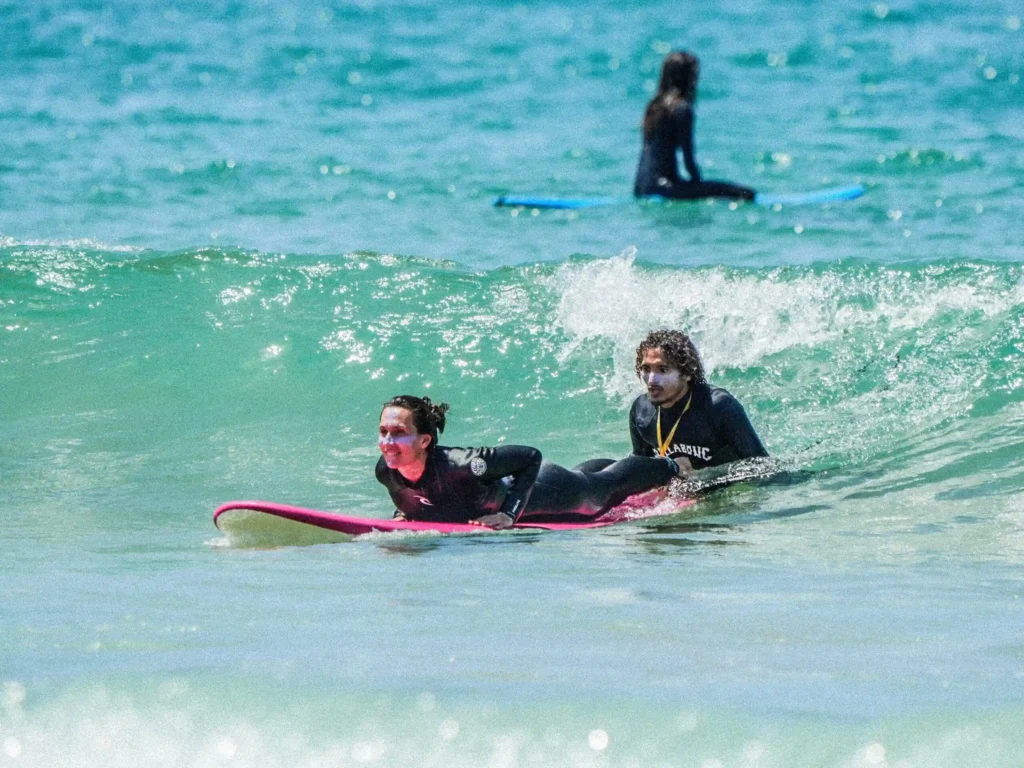
New to surfing? Explore our surf lessons in Tamraght to find a session that matches your level.
Can Experienced Surfers Enjoy Devil’s Rock?
Yes, experienced surfers may enjoy Devil’s Rock when the waves line up well. The appeal depends on the conditions, the section of beach, and what kind of session they’re looking for.
However, Devil’s Rock should not be treated as a guaranteed high-performance wave. Its character changes with the swell and shifting banks.
If you’re travelling specifically for powerful or technical waves, compare conditions at several nearby breaks before committing to your plan. Some of the area’s point breaks and more exposed spots demand substantially more experience.
Choose the wave that suits your ability on the day rather than surfing a particular spot simply because it’s famous.
What Should You Bring to Devil’s Rock?
A little preparation can make your surf session much more comfortable.
Before heading out, consider packing:
- A surfboard suited to the conditions and your skill level.
- A wetsuit appropriate for the current water temperature.
- Wax suitable for your board and the water conditions.
- Drinking water and sun protection.
- A towel and dry clothes for after the session.
- A phone with your route saved in advance.
- Any personal safety equipment recommended for your session.
If you’re travelling without a board, ask local surf schools and rental providers about available equipment, sizes, and prices before arriving.
Avoid assuming that equipment, parking, showers, or other facilities will always be available. Confirm current arrangements locally.
How to Get to Devil’s Rock from Agadir or Taghazout
Devil’s Rock is accessible from the wider Agadir and Taghazout area, making it a practical addition to a surf itinerary.
From Agadir
Travel north toward Aourir and Tamraght along the coastal road. The journey is commonly described as roughly 15 km from Agadir, but your actual distance and travel time depend on your starting point and traffic.
From Taghazout
Travel south toward Tamraght. The journey is relatively short compared with visiting surf spots farther along the coast, although traffic and your accommodation’s location can affect the trip.
Where can you park?
Check the current parking arrangements when you arrive. Follow posted signs, use permitted spaces, and confirm any fees with the attendant before leaving your vehicle.
Surf Etiquette and Safety at Devil’s Rock
A good session starts before you catch your first wave. Respecting the ocean and other surfers helps keep the lineup enjoyable for everyone.
Remember to:
- Check conditions and currents before entering the water.
- Give other surfers enough room to manoeuvre.
- Respect priority on the wave and avoid dropping in.
- Stay clear of swimmers and surf lessons.
- Follow advice from local instructors and lifeguards where available.
- Never paddle out in conditions beyond your ability.
- Avoid surfing alone if you’re unfamiliar with the area or conditions.
If you notice dangerous currents or waves that are too powerful for your level, don’t feel pressured to enter the water. There will be another session.
What Other Surf Spots Can You Visit Near Devil’s Rock?
One advantage of staying around Tamraght is the opportunity to explore several different surf spots without planning an entirely separate trip for each one.
Banana Point
Banana Point, near Aourir, is known for its point-break setup and can offer longer rides when the conditions line up. The best choice depends on the swell, crowd, and your experience.
Taghazout’s surf spots
The Taghazout area offers a range of breaks, from more approachable sessions to powerful waves that require stronger surfing skills.
Other nearby beaches
Depending on the day’s conditions, other beaches around Tamraght and Aourir may provide a better alternative. Ask a local instructor or experienced surfer to help you compare options rather than choosing purely by reputation.
The best surf trip is often the one that stays flexible.
Where Should You Stay When Surfing Devil’s Rock?
Staying around Tamraght or the wider Taghazout area can make it easier to explore Devil’s Rock and other nearby breaks.
Your ideal accommodation depends on your plans. If you’re learning, look for a place with access to reputable surf lessons and transport. If you’re travelling independently, compare location, board storage, equipment rental, and the time needed to reach your preferred spots.
Before booking, confirm the exact location and what is included in the price.
Frequently Asked Questions About Devil’s Rock Surf Spot
Where is Devil’s Rock Surf Spot in Morocco?
Devil’s Rock is on Morocco’s Atlantic coast near Tamraght and Aourir, north of Agadir and south of Taghazout.
Is Devil’s Rock suitable for complete beginners?
It can be suitable for beginners when the waves and currents are manageable. First-time surfers should take a lesson and follow a qualified instructor’s advice.
What is the best month to surf Devil’s Rock?
There is no single best month for every surfer. Winter is generally a strong period for surfing along the region’s Atlantic coast, but check the forecast and actual conditions before choosing a session.
Does Devil’s Rock work at high tide or low tide?
The best tide depends on the swell and the shape of the banks. Check a current local forecast and observe the waves rather than relying on one fixed tide recommendation.
Can I rent a surfboard at Devil’s Rock?
Surf schools and rental providers operate in the wider Tamraght and Taghazout area. Confirm current availability, prices, and equipment options before your visit.
Is Devil’s Rock crowded?
It can become busy, particularly when surf schools and visitors are in the water. Arriving at a quieter time may help, but always prioritise safe conditions and give other surfers room.
Is Devil’s Rock suitable when the swell is big?
Not necessarily. Larger swell can make the spot difficult or unsuitable, especially for beginners. Check conditions carefully and consider a safer alternative if the waves exceed your ability.
What is the difference between Devil’s Rock and Banana Point?
Devil’s Rock is commonly associated with a beach-break setup, while Banana Point is known for its point-break waves. Their performance varies with conditions, so neither is automatically the better choice every day.
Is Devil’s Rock worth visiting if I don’t surf?
It can still be a pleasant coastal stop for visitors who enjoy ocean views and exploring the Tamraght area. Check local access and facilities if you’re planning a visit without entering the water.
Ready to Surf Devil’s Rock? Join Our Surf Lessons in Tamraght
Thinking about catching your first wave in Morocco? Or maybe you’re ready to build your confidence and improve your surfing? Devil’s Rock is a great spot to explore when the conditions suit your level, and having the right guidance can make your surf experience even better.
At our surf school in Tamraght, we help surfers discover the joy of surfing with lessons suited to their experience, from complete beginners to those looking to develop their skills.
Learn to Surf with Local Instructors
When you join our surf lessons in Tamraght, you can enjoy:
- Guidance suited to your level: Build your confidence and work on the skills you need to progress.
- Local surf knowledge: Get help understanding the waves, conditions, and surf spots around Tamraght and Taghazout.
- A supportive learning experience: Focus on improving at your own pace, with safety and ocean awareness as priorities.
- An unforgettable Moroccan surf experience: Spend time in the water, meet fellow surfers, and enjoy the Atlantic coast.
Whether you’re planning your first surf session or want to make more progress during your stay, we’ll help you find a suitable place to start based on your experience and the day’s conditions.
Book Your Surf Lessons in Tamraght
Your Morocco surf adventure starts with the right session. Get in touch with our team to ask about lesson availability, equipment, and the best options for your level.
Ready to get in the water?